The Making of Geniuses
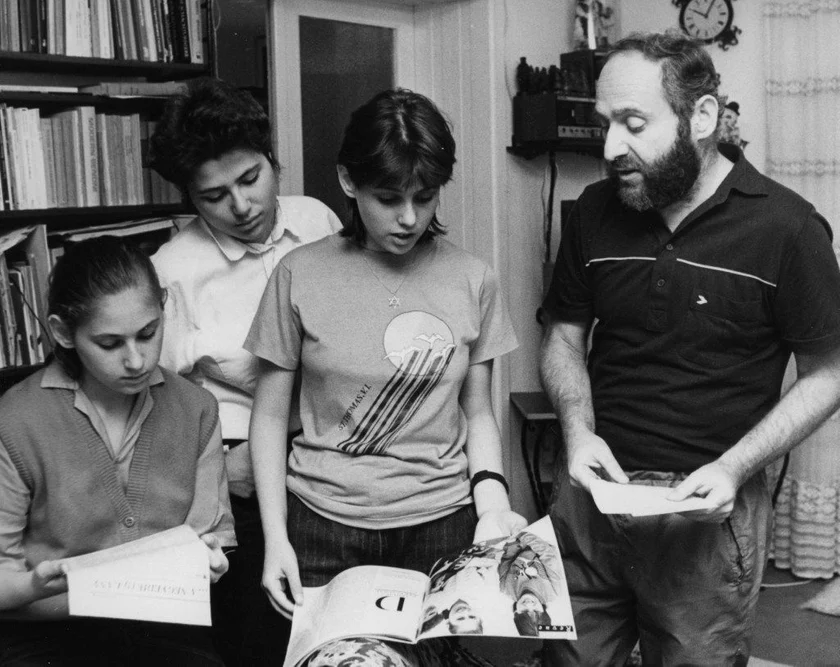
Laszlo believed that a person has to put in effort if he wants to stand out or succeed. He rejected the idea that anyone is born with ready-made skills, and he had a line he believed in completely and firmly: geniuses are not born, they are taught and trained.
Laszlo decided to test this idea he was obsessed with on his own children. So he wrote several letters to a woman who worked as a teacher, named Klara, asking to marry her. Being a teacher, she held an idea fairly similar to Laszlo's: teach anyone the right way, and they will grow in their field and their skills.
The two married and decided to work on a project to prove this theory. They picked the field they intended their children to excel in, and after some discussion they chose chess. We'll make our children legends of the game. So what's the plan?
We'll homeschool them. The house will be full of books about chess, with pictures of the game's stars and champions hanging on the walls and standing on the tables. The kids will play against each other daily and regularly compete in organized tournaments. The parents also decided to keep a notebook recording everyone who played against their children, and in which competition.
They had three daughters: Zsuzsa, Sofia, and Judit. The eldest, Zsuzsa, started playing the game at four years old. By the time she was six, she was beating people well ahead of her in age and in the game.
The second daughter, Sofia, did even better. At 14 she became a world champion, and some years later she earned the grandmaster title.
The youngest, Judit, was the best of all. At five she was beating her father at the game. At 12 she became the youngest player ever to enter the list of the world's top 100 chess players. At 15 years and four months she became the youngest grandmaster in history, and the number one ranked female chess player. Many in the chess community consider her the best female chess player of all time.
One of the stories the father, Laszlo, tells: in the middle of one night he noticed his daughter Sofia sitting in the bathroom playing chess. He told her to go to sleep, saying: leave the pieces alone. The daughter's funny reply: the pieces won't leave me alone.
This story is inspiring from several angles, and it carries several ideas
- Raising children well matters, and done the right way, a child may benefit from it his whole life.
- Upbringing is very important, but so is preparing an inviting environment, building a complete atmosphere around the things the parent cares about.
- Daily work and practice of any skill is enough to make a person competent in a short time, and a contender and a master over a long one.
- Having a role model or a guide motivates and speeds up learning and growth. Notice how each daughter benefited from the experience of the sister before her, matched her success at an earlier age, and gained more room to achieve.
- No one is born talented. A person may have a leaning toward a certain thing, and may progress somewhat faster than his peers, but it's the years of practice and training that make the talent. I think this is the most important point Laszlo was trying to get across.
The story is full of lessons and ideas, so I'll leave you the space to reflect on it and draw your own from your personal angle.
I first read about the family in the book Atomic Habits and found information about them on Wikipedia
Take care